

Have you ever wondered if it's fair that one law can hold a crime network leader responsible for every bad decision made in their operation? The law, known as RICO, short for the Racketeer Influenced and Corrupt Organizations Act, was first designed to take on mob families. Now it’s used in a variety of cases, including financial fraud, to keep wrongdoers in check.
In this post, we break down the basics of RICO charges and look at landmark cases that show how this law works in real life. Understanding RICO might even change the way you see the fight against organized crime and its impact on everyday people.
RICO Case Definition and Core Provisions
The RICO Act was passed in 1970 with one main goal: to break up organized crime groups. Initially, it was used to fight mob families, but over time it has grown to include white-collar crimes such as financial fraud.
Today, RICO helps hold the leaders of crime networks accountable when their group commits a series of crimes together. In simple terms, if a bunch of people work together in a long-running criminal scheme, those in charge can be legally responsible for all the wrongful acts. Ever wondered how that might impact everyday life?
Here’s how RICO breaks things down:
- Existence of an enterprise – This means showing there is an organized group involved in the crimes.
- Pattern of racketeering activity – You need to prove that several illegal actions form a continuous behavior.
- At least two predicate acts – This requires demonstrating that more than one criminal act was part of the scheme.
- Defendant’s conduct of the enterprise – It must be clear that the accused played a leading role in running the criminal operation.
- Nexus between enterprise and racketeering – This ties the defendant’s actions directly to the ongoing criminal efforts of the group.
In federal cases, these points form the core of a RICO charge. Prosecutors have to clearly show that there’s a steady link between the group’s organized activities and the illegal actions taken. They bring together the actions of various members with detailed evidence and witness statements to secure convictions and sometimes even seize assets linked to the criminal enterprise.
Landmark RICO Case Examples and Outcomes

RICO has been used in some major cases. It shows how the law fights organized crime in many different ways. Once mainly aimed at traditional mob families, it now covers many other criminal groups. These important cases have built the foundation for today’s federal racketeering strategies.
| Case Name | Year | Charges | Outcome |
|---|---|---|---|
| John Gotti | 1990 | Murder, obstruction of justice, loan sharking | Life sentence (died in custody in 2002) |
| Hells Angels (Oakland chapter) | 1979 | Drug and firearms racketeering | Hung jury; Sonny Barger acquitted |
| Key West PD | 1984 | Running a protection racket for cocaine smugglers | Deputy Chief Cassamayor arrested |
Each of these cases has set clear examples for how federal prosecutors deal with tough investigations. They had to work through huge amounts of evidence to build their cases. In fact, these decisions have guided later prosecutions and proven that the RICO law can flexibly cover many types of crimes. Ever wondered how this kind of ruling impacts everyday law enforcement? It shows that a strong legal tool like RICO can help shape effective, modern strategies for fighting crime.
RICO Case Processes: Indictment to Trial Phases
Pre-Indictment Investigation and Grand Jury
U.S. Attorneys start by digging into every detail to build a strong RICO case before any charges are filed. They use their power to ask for documents, check records, and talk with witnesses. Think of it like collecting the right ingredients to make a favorite recipe, each piece of evidence adds a special touch. This stage is all about carefully reviewing papers and working closely with witnesses to gather the proof needed.
After collecting the evidence, everything goes before a grand jury. The grand jury looks over all the information and decides if there’s enough proof to bring formal charges. Witnesses play a big part here, helping to link the suspected criminal actions to the person accused. This careful step keeps the process fair while making sure that only cases with solid evidence move ahead.
Trial and Sentencing Process
After an indictment, the trial begins in the courtroom. Here, a jury listens to both sides as lawyers explain the evidence and debate whether a continuous criminal operation is in play. The way a jury trial works is meant to be clear and fair, so every bit of evidence gets its proper turn in the spotlight.
If the defendant is found guilty, the case moves to sentencing. Federal RICO cases often have strict penalties, with some sentences lasting up to 20 years for each count and hefty fines. The accused can also choose to appeal the decision or the sentence. This part of the process shows how the court carefully weighs legal rules against the real-life impacts on everyone involved.
RICO Case Penalties and Sentencing Guidelines

Imagine facing decades behind bars just for running a series of illegal financial operations. When you're convicted under RICO, you could get up to 20 years in prison for every charge of racketeering, a countable act tied to organized crime. Fines can be steep too, reaching either $250,000 or twice the amount of money made from those unlawful acts. This strict setup is meant to scare off anyone thinking about joining organized crime and to firmly punish the leaders or active participants.
Beyond prison time, RICO cases also let victims take civil action. In these suits, injured parties can recover three times the damages along with attorney fees, which helps make things right for them. Plus, the law allows for asset forfeiture, meaning the government can seize homes, business assets, or anything else linked to the crime. These civil measures not only help victims but also serve as a strong warning to those considering systematic illegal activities.
RICO Case Defense Strategies and Notable Acquittals
Defendants charged under RICO often try to chip away at the evidence the prosecution presents. They argue that there wasn’t a tightly run organized group behind the acts and that the alleged team wasn’t organized enough to meet RICO’s standards. They also claim the supposed crimes don’t form a continuous pattern of illegal behavior as required by law. Sometimes, they point out gaps or mistakes in the evidence to challenge the underlying criminal acts. It’s all about breaking down the case piece by piece. A smart lawyer might even highlight errors in how evidence was collected or suggest other reasons behind the accused’s actions. Ever wondered how one misinterpreted incident could be pitched as part of a larger scheme?
Getting seasoned legal help from the start can make a huge difference in RICO cases. When defendants bring in experienced counsel early on, they stand a better chance of contesting every part of the charge. History shows us examples like Sonny Barger's 1979 acquittal, where timely legal action led to a dismissal or complete acquittal. With early intervention, lawyers can review evidence thoroughly, file the necessary motions on time, and negotiate effectively as the investigation unfolds. For more details on these defense tactics, check out the legal analysis framework at recentlegalnews.com?p=1928.
Emerging Trends in RICO Case Enforcement
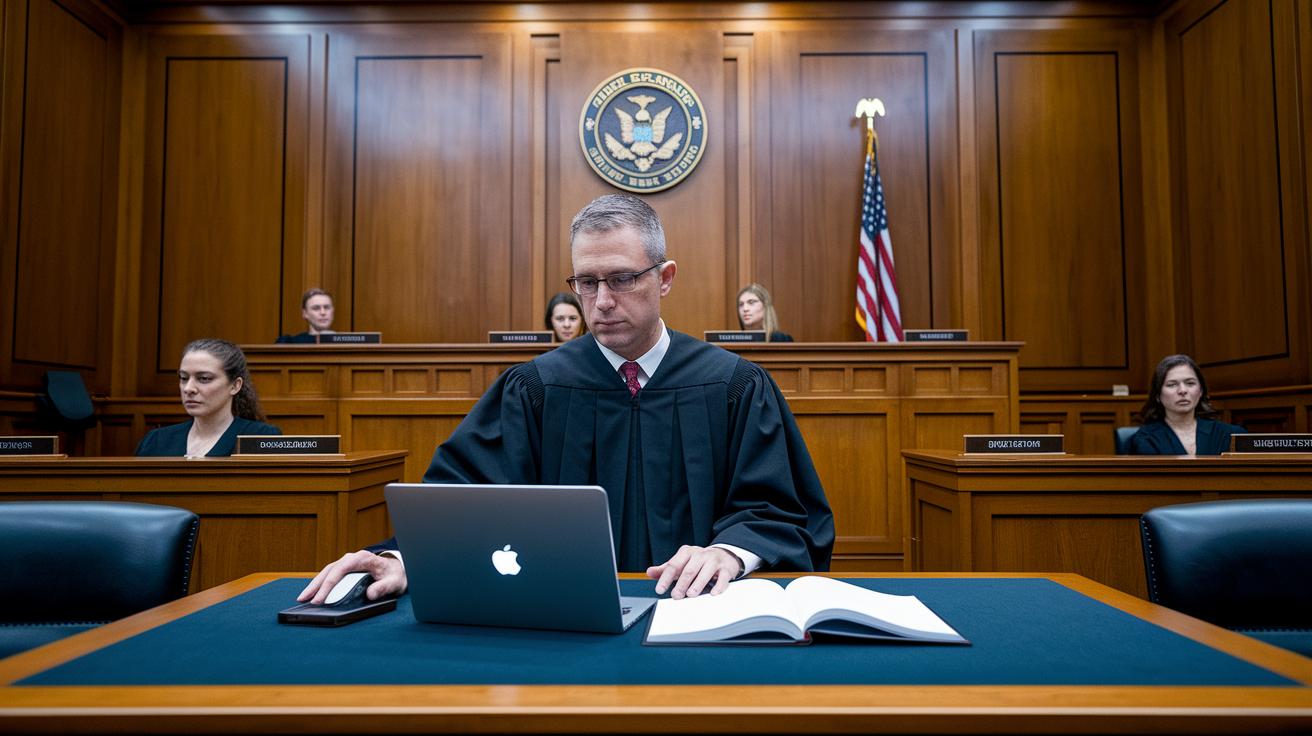
Federal prosecutors are now setting their sights on crimes that don't follow the old mobster playbook. They are using RICO to investigate issues like cyber-fraud and public corruption. Ever wondered how digital schemes hide behind everyday transactions? That’s where RICO steps in, linking these crimes into a clear pattern.
Recent cases in the music world, such as the famous YSL trial, show that even entertainment figures can get tangled up in modern financial tricks and online scams. This shift highlights that tools once meant for organized crime can work just as well for today's challenges.
Data backs up this change. Studies show that resolving tough RICO cases usually takes one to three years. Along with a growing case load, prosecutors are stepping up their game with smarter investigative techniques.
New methods include advanced data analytics and better ways for witnesses to work together. These fresh strategies bridge the gap between old-school investigation and the digital age. In fact, it’s clear the legal world is adapting to modern challenges, keeping RICO a powerful weapon against organized and dispersed criminal activities.
Final Words
In the action, we explored the essentials of a rico case. We broke down its history, core provisions, and the five key elements governing federal prosecutions.
We also highlighted landmark cases, step-by-step processes from indictment to trial, and the penalties involved. Legal defenses and emerging trends were discussed too. This article shows how well-focused legal analysis can help make informed decisions and promote clarity in today's complex legal news. Keep your focus sharp as you watch how these topics continue to shape legal strategy.
FAQ
What is a RICO case?
A RICO case involves using the Racketeer Influenced and Corrupt Organizations Act to charge individuals or groups connected to organized crime or white-collar fraud, linking multiple criminal acts to an enterprise.
What does a RICO case mean in simple or slang terms?
The term “RICO case” simply refers to a legal action under the RICO Act aimed at tackling organized crime, where authorities connect a series of criminal acts to one ongoing enterprise.
What are some famous RICO cases?
Famous RICO cases include high-profile prosecutions such as those involving mafia leaders like John Gotti and other organized crime figures, which have shaped how federal law targets conspiracy and criminal enterprises.
What are the 35 crimes under the RICO act?
The 35 predicate crimes include offenses like bribery, fraud, murder, and drug trafficking. These varied crimes are used to show a pattern of illegal behavior tied to a criminal organization.
How do you get charged with a RICO violation?
Being charged with a RICO violation requires the prosecutor to prove an enterprise connection, a pattern of at least two predicate crime acts, and evidence linking the defendant’s behavior to this criminal enterprise.
What is the minimum sentence for a RICO charge and how long are you in jail?
A RICO charge often leads to lengthy prison terms, with sentences varying based on the nature and extent of the crimes. Federal penalties can include years in jail, sometimes with multi-year minimums per count.
What does racketeering mean under the RICO Act?
Under the RICO Act, racketeering means engaging in a pattern of criminal behavior—such as fraud or drug trafficking—that is part of an ongoing illegal enterprise, forming the basis for the charge.
Has anyone successfully beaten a RICO case?
Some defendants have successfully beaten a RICO case by challenging the proof of an ongoing enterprise or disputing the alleged pattern of criminal acts, often relying on strong early legal representation.