
Have you ever wondered if real justice can be reached in international courts? The trial in The Hague makes us rethink fairness around the world.
Back in 2002, these court processes started to change how we look at serious crimes like genocide and war crimes. Picture the evidence set out like pieces in a puzzle, each one showing how high the stakes are for people everywhere.
This trial makes us ask a big, simple question: What does real justice mean for us all? As we dig in, we uncover bold insights and discover how these landmark cases affect our everyday lives.
Let’s take a closer look at these proceedings and see how they shape our understanding of justice in a global community.
Landmark Hague Trials: Foundational Proceedings and Outcomes
In 2002, the International Criminal Court opened its doors as the first permanent court to try very serious crimes like genocide, crimes against humanity, and war crimes. It now counts 125 member countries, with 124 following the rules of the Rome Statute, a kind of guidebook for its work. The Hague, where the court is based, quickly became known as a strong symbol of justice and a key location for big legal battles.
The court works on about $187 million a year in 2024, with each member contributing based on their economic strength. It has earned a reputation for handling high-profile cases and tough legal challenges. Over 50 investigations have been started, leading to 21 arrests, 10 convictions, and 4 acquittals. Picture a courtroom where every piece of evidence and every witness tells the story of a deep need to set things right.
From the very start, the ICC has taken on cases that have reshaped how human rights are protected around the globe. One landmark moment came in March 2025, when former Philippine President Rodrigo Duterte was arrested on charges tied to extrajudicial killings during his time in office. This event not only showed how far the court’s reach extends but also brought the controversial Banda case back into the spotlight, sparking renewed public debate.
A big focus in these trials is on clear and honest procedures, gathering evidence carefully and keeping a strict chain of custody for all documents and physical proof. Imagine a simple case summary: witnesses arrived, evidence was secured, and the trial pressed on, echoing the classic idea of true justice. These cases remind us why the ICC is so important and continue to shape legal standards around the world, inspiring more calls for international teamwork to protect human rights.
Hague Trial Mechanics: Evidence and Procedural Framework
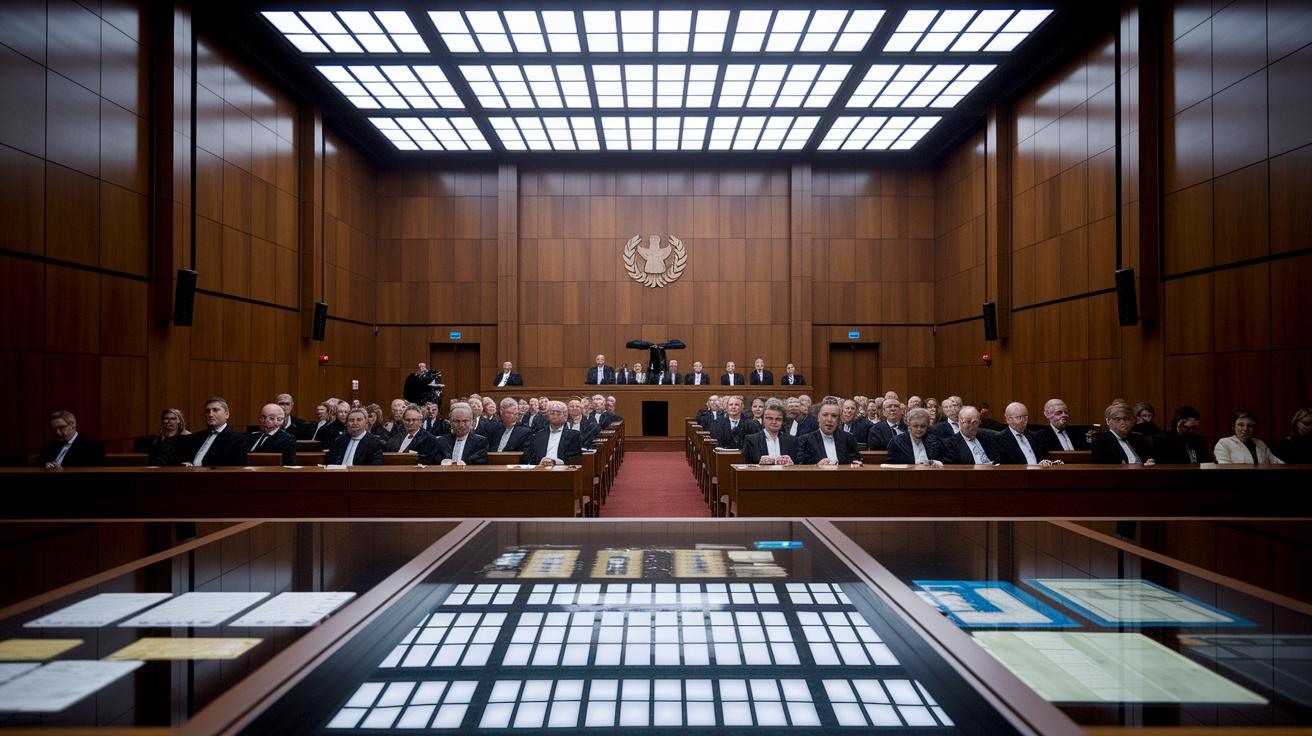
At the International Criminal Court, clear rules are in place to handle every piece of evidence with care. They use a strong chain-of-custody for both physical and digital items. This means that from the moment evidence is collected until it is shown in court, its authenticity is kept intact. For example, during the Dominic Ongwen trial, testimony from seven women, who were allegedly forced into marriage, was carefully preserved from the start. Imagine stepping into a court where every document and word is tracked like a story from beginning to end. This helps everyone trust that what appears on the record is truly what happened.
Recorded court transcripts also play a big part in these trials. Judges and lawyers review testimonies and written statements to piece together the events that unfolded. They ask detailed questions to test every statement, spot any differences, and check all the facts. This method is meant to reduce mistakes and reveal the truth, especially in complex war crimes cases. Each question and answer adds a new layer to the overall judicial process.
There was even a time when the ICC Appeals Chamber used common international law, which is a set of widely accepted rules, to deny immunity to a high-profile suspect. This showed that legal rules are applied fairly to everyone. With detailed records and open reviews, the process remains transparent for all parties involved. By sticking to these established procedures, The Hague builds trust and sets strong standards for global justice. Every single step is crucial in keeping mistakes low and ensuring that key details are preserved for fair and consistent trials.
Case Study Selection in Hague War Crimes Tribunals
The Banda case came back into public discussion after years of silence because there were still open questions about its procedures. People wondered if important evidence details or courtroom steps had been missed. You might hear someone say, "After so many years of quiet, the Banda case burst back into the spotlight with tricky legal puzzles that make us question how justice is shown in war crime trials." It reminds us that old cases can raise new issues, mixing strict legal rules with political concerns.
The Kwoyelo case also sparked heated debate. It brought up tough questions about giving amnesty, a legal pardon, to suspects linked with violent acts by the Lord's Resistance Army. Legal experts reviewed the case closely through the African Commission. The discussion wasn’t just about finding guilt or innocence; many worried that offering amnesty might let dangerous actions go unchecked. Some compared the process to carefully sorting through layers of important papers to make sure nothing is lost.
We also see these challenges in trials for Syrian war crimes held in courts in Sweden and Germany. Backed by a Human Rights Watch report and GroJIL analysis, these cases have grabbed international attention. They show how courts from different countries can work together to handle war crimes. Meanwhile, in Cambodia at the Extraordinary Chambers in the Courts of Cambodia, appeals led to life sentences being confirmed while other convictions were overturned. This mix of outcomes reminds us that even long-established tribunals need to keep updating their methods.
- Banda case: came back into the public debate due to procedural issues
- Kwoyelo case: raised tough questions over granting amnesty
- Syrian war crimes and Cambodia appeals: showed how courts in various countries handle war crimes differently
In short, looking at these cases helps us understand how venues like The Hague are evolving. They offer a clear picture of how legal disputes and final rulings shape the global pursuit of justice.
Hague Trial: Bold Insights on Justice
In 2002, the United States pulled its signature from the Rome Statute because there were worries that the court might gain too much power. Many saw this as a sign of a bigger issue, that the court could sometimes overshadow the authority of individual states. Some critics even point out that the International Criminal Court (ICC) has a hard time getting convictions, especially when legal cases from different countries get mixed up with political bias. Ever wondered how tricky it can be to catch war criminals while still respecting a country’s independence?
There are ongoing debates about whether judges are properly qualified and if prosecutors are making fair decisions. Here are the main points of concern:
| Issue | Concern |
|---|---|
| Prosecutorial Limits | Is the court overreaching its authority? |
| Legitimacy | Do these actions upset the balance of power? |
| Cross-Border Challenges | How does international law mesh with national interests? |
These discussions are more than just academic debates. They have a real impact on how victims of conflicts see justice and on how nations respond when they face international criticism. Balancing the need to hold individuals accountable with respecting a state’s sovereignty remains a challenging puzzle. Every decision made in The Hague, whether it’s choosing judges or setting charges, is carefully watched as a sign of what people expect from global justice.
Impact of Hague Verdicts on International Accountability
Big verdicts from The Hague have done more than change courtroom routines. These decisions have sparked legal changes at home that go well past just one trial. In some places, new laws have been made to match these global rulings. In others, criminal codes were updated to include bigger incitement charges for crimes against humanity, war crimes, and even aggression. One legal expert put it simply: "A verdict from The Hague set off a cascade of changes, much like a stone thrown into still water."
These rulings have also led to changes in the Rome Statute. Legal experts say that these updates now broaden what counts as incitement that can be prosecuted. This shows a steady push for countries to follow treaties more closely and improve standards for wartime justice and coming together afterward. In effect, one could say, "The ripple effect of a single verdict can eventually reshape national criminal codes." When a landmark case ended, many lawmakers and judges even said, "This decision is rewriting our own legal playbooks."
Following several cases at The Hague, diplomatic and policy changes took shape. In countries like Uganda, for example, prosecutions inspired by the International Criminal Court’s work on the LRA case paved the way for new steps toward justice after conflict. These rulings also have a big impact on international relations. They help balance global accountability with a country’s own legal rules.
For more details on how these changes shape legal systems worldwide, check out origins of criminal law systems.
Future Directions for Hague-Based Tribunals

Many fresh ideas are coming up to change Hague tribunals for the better. Analysts believe that the Rome Statute (the international treaty that lists serious crimes like genocide) might be widened to cover urges to commit crimes against humanity and acts of aggression. This means that legal bodies could soon tackle not only genocide, but also other harsh crimes happening in conflicts worldwide. Some even suggest setting up a special tribunal for the widespread violence seen in Ukraine, a situation that many compare to the intensity of World War II. One legal expert put it this way: "Imagine a tribunal that changes its rules as quickly as a team updates its playbook during a fast game."
Officials are also taking a hard look at how trials work. They are debating the best ways to use digital evidence and how to better organize resources during trials. Experts are testing ideas on how to adjust rules as technology and global events change. They are also studying how courts can handle new types of evidence while ensuring every trial stays fair and smooth. These changes could create a more flexible system for handling conflicts in the future. For more on how these updates are being planned, see the role of law commissions in legal reform.
Final Words
In the action, we explored key legal trials at The Hague and the courtroom mechanics that keep justice alive. We saw how vital case studies and debates over jurisdiction sharpen legal processes while shaping future reforms in global accountability. Evidence, verdict impact, and evolving procedures together highlight the fascinating journey of every hague trial. With each proceeding, international law takes a step toward fairness and continued progress, leaving us optimistic about the path ahead for justice worldwide.
FAQ
What does the International Criminal Court (ICC) do and who governs it?
The ICC prosecutes genocide, war crimes, and crimes against humanity. Its judges and president come from member states, with 125 nations backing its Rome Statute foundation.
Which countries are not members of the International Criminal Court?
Some major nations like the United States, China, Russia, and India have not joined the ICC, opting for national legal routes instead of accepting its international jurisdiction and Rome Statute framework.
Can the ICC prosecute crimes committed by non-member states?
The ICC typically handles cases within member territories or where non-member states accept its jurisdiction. It cannot normally prosecute crimes solely from non-member states without a referral or special conditions.
What role do International Court of Justice judges play?
ICJ judges resolve disputes between nations and provide advisory opinions on international law matters. They are selected to be impartial figures representing global legal standards in settling state conflicts.
What is the purpose of the courts at The Hague, and which is most famous?
The Hague courts, notably the ICC and ICJ, settle international legal disputes and try cases for serious violations. They are widely recognized for upholding global justice in high-profile cases.
Who has been tried or can be tried in The Hague courts?
The Hague courts handle cases involving war crimes, crimes against humanity, and genocide. They have tried political leaders, military officials, and others when strong evidence shows breaches of international law.