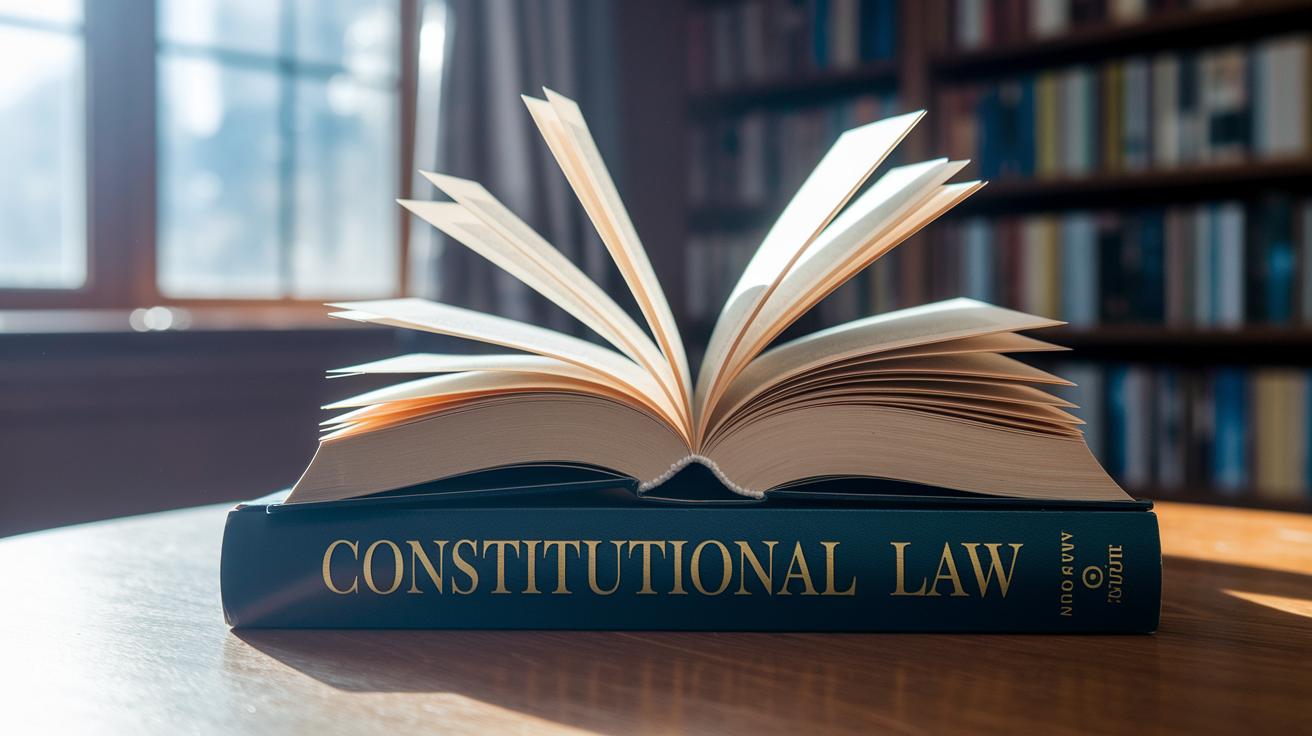

Have you ever wondered why the rules we live by still affect us today? A long time ago, brilliant thinkers in ancient Greece, Rome, and even early modern Europe came up with ideas that form the basis of our current laws. They created systems designed to guard our rights and keep power in check. In this piece, we'll take a closer look at how simple rules grew into the legal structures that guide our government now. Ever thought about how these old ideas still shape our lives? Let's dive in and find out.
Historical Evolution and Analytical Overview of Constitutional Legal Frameworks
Long ago, in ancient Greece and Rome, people first laid down ideas for a system where laws ruled instead of just powerful individuals. Imagine a time when folks believed that the rules should guide society, not a single ruler. For instance, in ancient Athens, one of the early testing grounds for democracy, the idea was that the government should work for the people.
Then came the Enlightenment in the 17th and 18th centuries, a period when many bright minds rethought how government should work. These thinkers said that everyone’s rights needed protection from the government, and that power should be shared so no one branch could dominate. This idea of dividing power helped shape what we now call the separation of powers. The U.S. Constitution, created in 1787, is a prime example. It was inspired by these fresh ideas and still guides American government while offering lessons to many other countries.
Key ideas like the rule of law, separation of powers, and judicial review, where courts check if the government is following the law, became essential tools for understanding how politics affects our everyday lives. Think of judicial review like putting together a legal jigsaw puzzle: you gather clues from the past, mix in some timeless principles, and see how they all affect our daily rights.
Over time, these ideas have continued to shape governments, making sure leaders play fair and are held accountable. This journey from ancient ideas to modern practices shows just how much of our current legal system grew from early thoughts about fairness and protection of rights.
Charter Origins and Early Government Edicts in Constitutional Legal Frameworks

State charters and early government edicts helped shape the kind of government we have today. In the early colonies, these charters worked like simple rulebooks that set up basic governance and tried to balance government power with personal freedoms. Leaders even added parts to limit what the government could do, kind of like making fair rules for a neighborhood game.
Back then, many colonial charters acted like early social contracts. They laid out rights and duties well before the word "constitution" was in common use. Documents like the Constitution Annotated from the Congressional Research Service, updated as recently as May 2022, help us see how these early rules and ideas of fairness developed over time. Ever wondered how these old rules still affect our daily lives?
Colonial edicts show us a time when local and state leaders, along with the emerging federal government, experimented with different ways to share power and protect rights. These pioneering documents used creative legal language and organized new administrative ideas, and their influence is still felt in modern debates about constitutional rules and state authority.
Milestone Case Law and Periodic Reform Chronicles in Constitutional Legal Frameworks
Key legal rulings have slowly reshaped how we view our constitutional rules. Back in 1803, the Marbury v. Madison decision set a major benchmark by giving courts the power of judicial review, that is, the ability to check government actions much like a referee keeps a game fair. Imagine a courtroom where the judge stands as the protector of justice; that’s the lasting impact of this case.
Then, in 1954, Brown v. Board of Education changed things again by ending the old "separate but equal" idea. This decision helped tear down unfair practices in public education, much like replacing a worn-out rulebook with a fresh set of guidelines that push for real equality.
Next, Roe v. Wade in 1973 added another layer by supporting a woman’s right to make personal choices about her body. This ruling has sparked ongoing debates about privacy and individual rights in our society. Every case like this not only settles a big issue at the time but also guides future legal changes.
Ever wonder how one ruling can influence generations? Those landmark decisions continue to shape legal discussions and reforms today.
Political Philosophy and Foundational Jurisprudence Underpinning Constitutional Legal Frameworks

Back in the day, thinkers like John Locke and Montesquieu set out ideas that still shape how we discuss law today. Old views on the social contract mix with new case studies that tackle modern challenges. In one digital privacy case, a judge said, "When individual rights meet modern regulation, our long-known ideas point to fresh ways to balance power and protection."
Today’s courts use our founding principles in unexpected areas. What once simply organized government now helps sort out issues such as online privacy and government oversight. A judge noted, "Our system of checks makes sure that no branch runs wild, even as technology changes our society."
New interpretations sometimes call the old ideals into question. In recent reviews, people have argued that while government branches should remain distinct, they must also adapt quickly to societal changes. One legal panel remarked, "As citizen rights evolve, we need to update our foundational ideas, without losing their true meaning."
If you need more help understanding these new views, check out the legal analysis framework explained.
Comparative Charter Studies Across National Constitutional Legal Frameworks
Around the world, nations use either written or unwritten systems to set up their constitutional rules. Written systems work like a clear instruction manual, laying out all the important guidelines in one place. On the other hand, unwritten systems mix together scattered legal summaries, long-held traditions, and past court decisions, sort of like following family customs that have been passed down over the years.
Countries also have different ways of changing their constitutions. In some places, a simple majority vote is enough to make a change, which keeps the system flexible. In others, getting an amendment approved involves many steps and approvals from different groups, which slows everything down. Some systems let courts review government actions to keep all parts of the government in check. Others, however, give courts a smaller role in tweaking or interpreting the rules. Ever thought about how small differences in these systems might affect everyday life?
This wide range of methods for storing, amending, and reviewing governing documents shows that there are many ways to protect people’s rights and hold governments accountable. Even though each system is unique, they all aim to make sure power is balanced and fair. For more details, check out legal restatements to see how different places set up and adjust their rules.
Modern Adaptations and Institutional Reform Trends in Constitutional Legal Frameworks

Sometimes, even the oldest rules need a fresh twist. Our constitutional systems are getting little updates that mix the old with the new. Lawmakers and judges are rethinking outdated debates and modernizing practices to better meet today’s challenges. Think about a town council changing its rules to welcome new voices – it’s like adding a fresh ingredient to an old family recipe.
Every now and then, real-life events show that being flexible helps government work better. Legal experts and everyday citizens push for changes that reflect our current needs. They say modernizing court steps and legislative processes stops old ways from holding us back. One legal analyst even put it this way: "Updating our founding documents is like giving an old computer a boost to run smoothly in today’s world."
These reform trends show how respect for tradition can go hand in hand with the need for progress. In the end, such updates keep our legal systems lively and ready to take on new challenges. Isn’t it interesting how even old rules can learn new tricks?
Final Words
In the action, this post traced how early ideas from ancient times shaped our modern legal system. We saw how foundational principles and key case rulings set the stage for today's debates and reforms.
A careful look at historical events and political philosophy makes the study of constitutional legal frameworks: history and analysis feel both timely and deeply human. The evolution of governance systems reflects our ongoing quest for fair and balanced law. Stay informed and optimistic for the future of legal progress.
FAQ
Q: What role does the U.S. Supreme Court play in constitutional law?
A: The U.S. Supreme Court plays a key part by interpreting the Constitution and checking laws, ensuring all governmental actions adhere to constitutional principles and protecting citizen rights.
Q: What is a constitutional law treatise?
A: A constitutional law treatise provides a detailed analysis of constitutional issues, offering commentary on key rulings, doctrines, and the evolution of legal principles essential for both practitioners and students.
Q: Why do independent judges have the power to strike down unconstitutional laws?
A: Independent judges hold this power to maintain an impartial check on government, ensuring that legislation adheres to the Constitution and that no law oversteps its defined limits.
Q: What does functionalism in constitutional law mean?
A: Functionalism in constitutional law focuses on how government structures work in everyday practice, emphasizing effective operation and maintenance of fairness in the legal system.
Q: What is structural constitutional law?
A: Structural constitutional law examines the organization of government institutions, outlining how different branches interact and balance power to prevent any single branch from becoming too dominant.
Q: How does Alexander Hamilton describe the judiciary and why?
A: Alexander Hamilton described the judiciary as the weakest branch because it lacks enforcement power yet remains essential to check other branches by interpreting laws and protecting constitutional rights.
Q: What is constitutional interpretation?
A: Constitutional interpretation involves analyzing the Constitution’s text and context to apply its principles in modern cases, balancing historical intent with today’s societal needs.
Q: What is a constitutional framework?
A: A constitutional framework is the set of rules and principles within a constitution that defines government structure, enforces limits on power, and protects the rights and freedoms of citizens.
Q: What was the first constitutional framework?
A: The first constitutional framework emerged from ancient systems like those in Greece and Rome, establishing early legal rules and ideas that later evolved into modern constitutional governance.
Q: What are the three theories of constitutional interpretation?
A: The three theories include textualism, which focuses on the Constitution’s exact words; originalism, which considers the framers’ intent; and the living Constitution approach, which adapts principles to modern times.
Q: What are the seven constitutional principles?
A: The seven constitutional principles typically include popular sovereignty, limited government, separation of powers, checks and balances, judicial review, federalism, and the protection of individual rights.