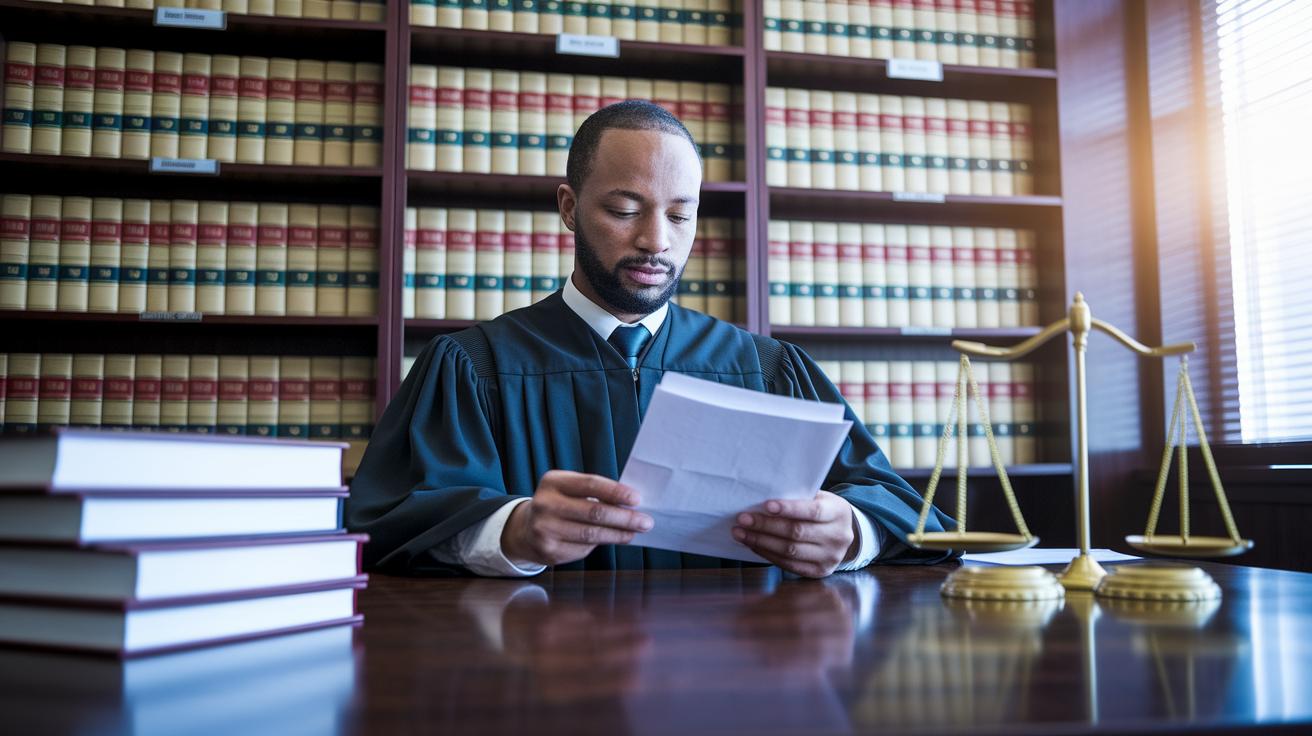

Have you ever wondered how judges turn tricky legal language into clear rules we all understand? They sort of break it down like a puzzle, putting together simple words, helpful notes, and old records to reveal what the law really means. This way, they help clear up old or unclear rules while making sure the law is fair for everyone. In this post, we explore how these techniques build trust in our legal system and bring real benefits to our daily lives.
Understanding Judicial Interpretation
Judicial interpretation is how judges figure out what a written law really means. They do this to make sure everyone is treated the same way under the law. Judges use simple language, look at the law’s background, and review old notes to clear up any fuzzy parts. This approach makes even complicated laws easier for everyone to understand.
Take, for example, the idea that when a judge reads a law, they ask, "What did the lawmakers truly mean?" This plain way of thinking shows why focusing on clear words is so important. It also helps plug any gaps left by how slowly laws sometimes change, much like a missing piece in a puzzle that connects legal rules to everyday life.
In real cases, this method keeps law application consistent across different courts. In China, for instance, the top court reads the law in full to help lower courts make similar decisions. This process not only clears up legal language but also builds trust that our legal system is fair and steady.
Key Interpretive Methodologies in Judicial Interpretation

Textualism takes a very straightforward approach to laws. Judges look at the written words exactly as they appear, much like reading a clear road sign that simply says "No Trespassing." They avoid extra guesswork and stick closely to the text to make sure decisions follow the law exactly as written.
Contextual Interpretation goes a bit deeper by considering extra documents and related legal texts. Think of it as putting together a jigsaw puzzle where every piece, from historical records to preparatory notes, helps reveal the full picture. This method helps clear up confusing parts in the law by showing how everything fits into a bigger system.
Teleological Interpretation focuses on the spirit behind the law. Judges ask, "What problem was this law meant to solve?" It's similar to following a recipe that aims to produce just the right dish. This technique is handy when laws need to keep up with changing times while still staying true to their original goals.
Originalism and Comparativism involve a thoughtful look back at legal history. Judges explore the intentions of those who first wrote the law and study how past courts handled similar issues. Imagine looking at old family photos to understand your roots, this method uses history and comparison to help decide modern cases in a fair and grounded way.
Judicial Interpretation in Landmark Cases
Judges have transformed the law in several key cases throughout Europe and the United States. They’ve shown that a thoughtful reading of legal texts can expand rights and clarify public policy. Take the 2002 case, Christine Goodwin v. United Kingdom. In it, judges examined how transsexual individuals were recorded in government documents. They blended straightforward text analysis with historical insights, updating legal definitions as society grew more inclusive.
Environmental rights also received a boost in cases following the Chernobyl disaster. In López Ostra v. Spain (1994) and Guerra v. Italy (1998), courts compared different legal systems to interpret environmental rules. Their decisions ensured that both public health and our natural surroundings stayed protected even in challenging times.
There’s also Airey v. Ireland from 1979. Here, judges firmly established free legal aid as a right, a reminder that real justice depends on everyone’s ability to access the court system. And then, Defrenne v. Sabena (1976) reinforced the principle of equal pay for equal work, giving labor rights a solid legal foundation. In D. H. and Others v. Czech Republic (2007), the courts softened strict evidence rules to protect vulnerable groups, such as Roma children in schools.
Over in the United States, the Kelo v. City of New London case (2005) sparked a fresh look at the “public use” clause in property law. It highlighted the constant balance between governmental power and individual rights. Each of these cases shows how turning complex legal language into clear protections can have a real impact on people’s lives.
Judicial vs Statutory Interpretation: Core Distinctions

Statutory interpretation sticks to the words written in the law. Judges treat the law like a set of clear road signs, using plain language rules to follow what’s written. They also look at the law’s history and debates to make sure the lawmakers’ original message comes through.
Judicial interpretation, however, casts a wider net. It digs deeper than just the words on the page, much like examining a recipe to appreciate every ingredient. Here, judges take into account big-picture ideas and public goals. They often use approaches like purposivism, which means focusing on a law’s purpose, and systemic methods that consider how a rule fits into the broader system.
To put it simply, while statutory interpretation is all about the strict rules created during the lawmaking process, judicial interpretation is about capturing the spirit behind those rules. Even if a law’s language appears narrow, careful analysis can reveal what the lawmakers really intended. Ever thought about how a straightforward instruction might hide a richer, deeper meaning?
Scholarly Perspectives on Judicial Interpretation
Academics and legal professionals often chat about whether judges should stick to what the law's founders intended or just go with the plain words written down. This debate, often called originalism versus textualism, pits digging into history against using everyday language. One legal scholar put it simply, saying, "I lean on the original words, much like a detective poring over old letters to piece together a story."
Some worry when judges read laws too broadly. Critics feel that stretching the law, like what’s been seen in some cases at the Chinese Supreme People’s Court (a high court in China), may blur the clear separation of powers. They say that when judges take on too much, it can upset the balance that a written constitution is meant to protect.
Political influence is another burning issue. In places such as Hungary and Poland, there’s a concern that panels filled with judges loyal to political leaders might lean too far in favor of those in power. These loyal panels might end up acting more like government cheerleaders rather than independent judges. Because of this, many are calling for stricter rules and clearer ways to choose judges.
A growing number of legal experts suggest a more balanced path. They believe in mixing a careful study of legal ideas with a practical look at the facts of each case. It’s sort of like balancing an old recipe with new ingredients; you respect historical meaning while considering today’s needs, so the law stays fair and clear for everyone.
Final Words
In the action, this article explored how judges read and shape law through textual, context, and purpose-based approaches. It highlighted landmark cases and scholarly debates that showcase the blend of practical application and legal theory. We also looked at the space between strict law texts and broader interpretations, giving clear examples that resonate with real-life impact. Embracing thoughtful judicial interpretation can pave the way for fair outcomes and smoother legal processes. There's hope that these methods continue to serve justice with both clarity and care.
FAQ
What are some examples of judicial interpretation?
The judicial interpretation examples show how courts clarify laws through decisions like those in Goodwin v. United Kingdom and Kelo v. New London, where judges explain and adapt legal rules to fit real cases.
How does judicial interpretation work for constitutional and statutory texts?
The judicial interpretation of constitutional and statutory texts means judges examine clear language, context, and history to give laws meaning. They use methods like plain-language review and purpose analysis for consistent application.
What is a simple definition of judicial interpretation?
The simple definition of judicial interpretation is the process judges use to explain written law. This process helps apply legal texts fairly and consistently, bridging gaps when legislature moves slowly.
Why is judicial interpretation important?
The judicial interpretation importance lies in its role in ensuring laws are applied in a fair and modern way. It adjusts legal principles to changing circumstances and upholds justice by clarifying rules.
What is the judicial interpretation of a contract?
The judicial interpretation of a contract means judges look at the words, context, and intent behind the agreement. This process helps ensure that both parties’ understandings are honored by the court.
What is the interpretation of justice in judicial philosophy?
The interpretation of justice in judicial philosophy shows how judges use fairness and legal thought to give meaning to laws. This philosophy blends historical context with modern values to guide fair decisions.
What does a judicial interpretation PDF typically include?
The judicial interpretation PDF usually includes details about methods, case studies, and legal principles used by courts to clarify laws. It serves as a resource for a clear explanation of these processes.
What is a synonym for judicial interpretation?
The judicial interpretation synonym can be seen as legal reading. Both terms refer to the way judges examine and clarify laws by reviewing language, context, and purpose in legal texts.