

Ever thought about how having an open drink in your car might land you in legal trouble? In this discussion, we break down one simple law that clears up what can be a tricky area of driving. We look at real cases from different states, like how Florida handles nonalcoholic beverages versus Texas sticking to rules for sealed drinks.
We explain what counts as an open container in plain language, so you can see clearly why these rules matter to every driver. It might seem small, but even little details like this can have a big impact on your day on the road. Ready to take a closer look at how legal clarity can guide you safely?
Open Container Law Defined: Legal Scope and Key Definitions
In Florida, the law 316.1936 says that an open container is any bottle, can, or cup that either has a broken seal or has had its contents removed while inside a vehicle. Think of it this way: if you’re driving with a cola bottle that’s open, it won’t break the law unless the drink was alcoholic. With alcohol, however, the rules are much tighter.
Over in Texas, Penal Code Sec. 49.031 tells us that any container holding alcohol must be sealed. So, if you have a beer bottle with the cap off in your car, even if you’re not drinking, it’s considered an open container. Imagine waiting at a red light and still having that loose cap on your beer.
New York takes a slightly different approach. There, the police only worry if the container actually has alcohol in it during a stop. This means if the container is empty or still sealed, you’re fine. Similarly, California doesn’t allow public drinking in certain spots, like on a beach. In these areas, even if you’re not in a car, you might get stopped if you’re carrying an unsealed alcohol bottle.
Key definitions include:
- Open container: A container with a broken seal or that has had its contents removed.
- Legal beverage possession: Keeping alcohol in its sealed, unopened form while moving from one place to another.
Jurisdictional Variations in Open Container Law: State Drinking Rules and Vehicle Beverage Prohibitions
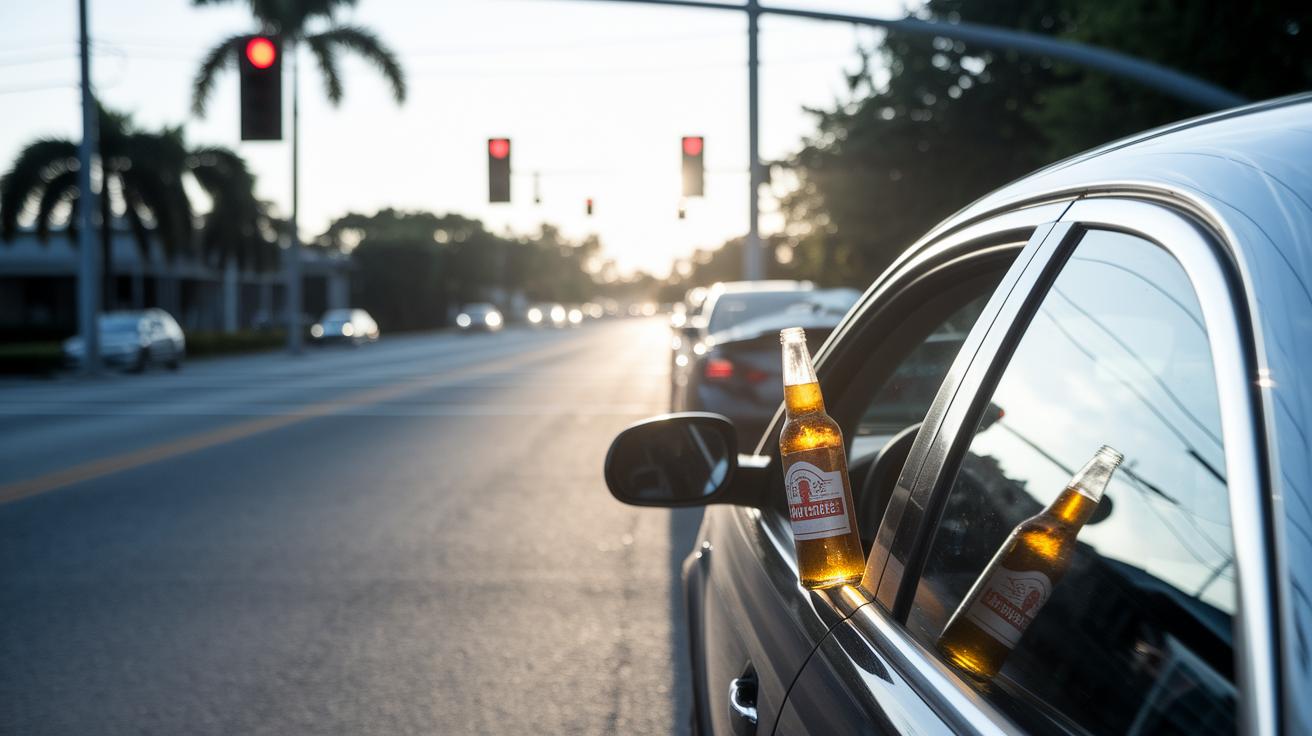
In Florida, the rule is simple: you can’t have an open container in a moving or even parked car on public roads. Imagine waiting at a red light with an unsealed beer bottle on the passenger seat. Even though the car is stopped, the law lets officers step in.
In Texas, the law is just as clear. Even if everyone in the car is sober, an open container in the passenger area can still earn you a citation. Picture being on a family road trip with an open drink sitting in the back seat. The law doesn’t pick winners; it applies to everyone equally, so you really have to be careful.
New York takes things a step further. Their open container rule doesn’t end at the car door, it covers public places too. So if you’re walking on a busy street or hanging out in a park with an open beverage, you could still face trouble. Ever wondered how that simple rule might change your day at a community event?
California mixes it up by enforcing vehicle rules and also banning open containers in public areas like beaches, parks, and streets. This approach is all about safety, trying to keep order no matter where alcohol might pop up in our everyday lives.
Open container law Empowers Legal Clarity
Florida law takes open container violations seriously. If it’s your first time, you could face a fine up to $90 and get 3 points added to your driving record. Picture waiting at a stoplight with your drink unsealed; not only might you lose some cash, but things could get even tougher if it’s linked to a DUI situation.
Texas is no different when it comes to these rules. Here, any open drink is treated as a Class C misdemeanor with fines up to $500 for each container. Imagine someone in the back seat with an open drink, even if that person isn’t drinking, they’re still in trouble. And if the charge comes along with a DWI, it bumps up to a Class B misdemeanor, which can mean fines up to $2,000 and jail time from 6 to 180 days.
New York follows a similar approach. Even an empty container can earn you a roadside ticket, much like a DUI offense. Think of it this way, you might assume an empty bottle is harmless, but here it could still get you cited.
These examples show why knowing the ins and outs of open container law matters. Staying informed can save you from unexpected fines and legal hassles on the road.
Exceptions and Exemptions in Open Container Law: When Open Containers Are Permitted

In Florida, the law has some clear exceptions. For example, if you’re riding in a taxi, limousine, or in an RV or camper that’s at least 21 feet long, you’re allowed to drink alcohol, but only in the designated living areas. Ever thought about enjoying a relaxing ride while sipping a drink and staying on the right side of the law?
There’s another small but important point. Drinks that have 0.5% alcohol by volume or less aren’t considered open containers under Florida law. This means that if your beverage has only a tiny trace of alcohol, you don’t have to worry about breaking any rules. It’s a handy rule for families and anyone who just wants to enjoy a refreshing drink without stress.
Texas offers a different kind of exception. Here, if an open container ticket is used in a DWI case, there can be grounds to dismiss it. This twist in the rules might save someone from facing a tougher penalty if they’re charged with two violations at once.
New York takes another approach. In that state, empty or fully sealed containers don’t count as open containers for citation purposes. So, if you have a sealed bottle on board, it’s considered legal. This helps drivers and passengers steer clear of extra legal complications.
Enforcement and Compliance: How Open Container Laws Are Policed
Law enforcement officers handle each roadside check with great care. They look at every situation on its own, checking for things like a broken bottle or a loose cup left in the passenger area. Imagine an officer stopping a car at a busy event and noticing a drink left on the seat. Instead of rushing to decisions, the officer takes a moment to study the scene. This careful approach helps prevent problems that could turn a minor issue into more serious troubles, like drunk driving charges or complications with probation or parole.
On busy weekends or during special events, city teams often work side-by-side with state troopers. Their teamwork is all about keeping the roads safe when alcohol is involved. Every stop becomes a chance to stop risky behavior before it starts. One officer put it simply, saying, "If we find an open container, we act because we want everyone to be safe." By treating each vehicle with this level of care, they make sure everyone understands the law and the importance of following it.
State-by-State Comparison of Open Container Law: A Regulatory Framework Chart

This table shows how four different states handle open container laws. Each state sets its own rules, penalties, and exceptions, which means the details can be very different. For example, if you’re caught with an open drink in Florida, you might be fined up to $90 and get 3 points added to your driving record. Imagine being stopped at a red light even with a drink in the passenger area, Florida law says you can still get ticketed.
Texas is even stricter. Under its law (Penal Code 49.031), having an open container can cost you up to $500 for each one. Even if nobody is drinking at the moment, the law still applies. So, a quiet family drive might turn problematic if there’s an unsealed container in the car.
In California, the law is set out in Bus. & Prof. Code 25658. The fines change from one county to another, which means the ticket amount may vary depending on where you are. In busy street areas, the rules might be enforced more strictly.
New York uses Admin. Code 10-125 as its reference. Here, the penalty for an open container is similar to a DUI citation. Even if the container is empty, if it’s easily within reach, you might still face a violation.
| State | Law Reference | Penalty | Key Exceptions |
|---|---|---|---|
| Florida | §316.1936 | Up to $90 + 3 points | Taxis, limos, RVs 21 ft+; ≤0.5% ABV |
| Texas | Penal Code 49.031 | Up to $500 per container | Applies regardless of who is drinking |
| California | Bus. & Prof. Code 25658 | Varies by county | Enforced more in designated zones |
| New York | Admin. Code 10-125 | Similar to a DUI citation | Even empty containers are counted if accessible |
This clear table helps drivers quickly see how different states handle open container laws. Knowing these details can give you the confidence to navigate local rules and stay on the right side of the law.
Final Words
In the action, the article broke down the basics of open container law, defining what counts as a violation and comparing rules across states. It highlighted key penalties and exceptions while showing how enforcement varies among Florida, Texas, New York, and California. Each section unfolded clear facts and real examples so readers can see how laws shape everyday situations. The article leaves you with a clear understanding of open container law and a positive outlook on making informed legal choices.
FAQ
What does the open container law in California cover?
The open container law in California prohibits drinking from unsealed alcohol containers in public spaces and vehicles, with restrictions designed to keep public areas and roads safe.
How do open container laws vary between states?
The open container laws differ by state, with each jurisdiction defining open containers and setting specific penalties, exemptions, and areas, like vehicles versus public spaces.
How does the open container law apply in vehicles?
The open container law in vehicles bans possessing or drinking alcohol from unsealed containers, even if the vehicle is parked or moving, ensuring no accessible alcohol for occupants.
What does the open container law in Texas entail?
The open container law in Texas forbids any carry of unsealed alcohol in vehicles, which can result in misdemeanor charges and fines up to $500 per container without jail time unless tied to DWI.
What are New York City’s rules on open containers?
New York City law bans open alcohol containers in both motor vehicles and public areas; even empty or sealed containers may be treated differently during police stops.
What penalties apply under California’s open container law?
In California, violating the open container law can include fines and citations, with specific penalties varying by county and enforcement circumstances, especially in designated drinking zones.
How are open containers defined in Colorado and Ohio?
In Colorado and Ohio, an open container is defined as any bottle, can, or cup with a removed seal or uncovered alcohol, making them subject to penalties if found in prohibited areas.
What does Mississippi’s open container law state?
Mississippi’s law on open containers prohibits visible, unsealed alcohol in vehicles and public areas, aligning with broader state efforts to deter drinking and driving.
How are open container laws applied during public walking?
Open container laws often extend to public walking areas, where carrying unsealed alcohol may be illegal, ensuring public spaces remain free from alcohol-related disturbances.