

Ever wondered if a toy could hold a hidden secret? Back in 1999, Hong Kong was shocked when investigators found something truly horrifying inside a Hello Kitty doll. This case, full of brutal details and ongoing debate, made experts rethink not only how crimes are solved but also how justice should be served. A 23-year-old nightclub worker lost his life at the hands of cold and calculated criminals, making this one of the most chilling crimes ever recorded. Keep reading to follow the twists and turns of this unforgettable case.
Overview of the Hello Kitty Murder Case
Before the trial brought closure, little did anyone expect that a single detail, the hidden skull in a Hello Kitty doll, would spark community debates and forever change how this crime is viewed in both legal and cultural circles.
Content Warning: Graphic descriptions follow.
Back in 1999, Hong Kong was stunned by a crime that shook the whole city. Fan Man-yee, a 23-year-old nightclub worker, was held captive in a Tsim Sha Tsui apartment for several weeks. During that time, she suffered severe torture and was brutally murdered. Investigators later revealed that her body was cut into pieces, and her remains were packed into three sealed bags. In a detail that sent chills down the spines of many, her skull was hidden inside a Hello Kitty doll. This shocking twist pushed the case into one of the most notorious chapters of Hong Kong’s criminal history.
The police and forensic experts worked tirelessly to gather every piece of evidence. Their careful work showed just how much suffering Fan endured and highlighted the cold, calculated nature of the crime. Each new detail helped piece together a comprehensive picture, making this case a reference point in Hong Kong homicide studies.
Three men were arrested and held accountable for their part in this awful crime. On December 6, 1999, the courts sentenced all three to life in prison. This verdict was a powerful statement from the justice system, showing a firm commitment to tackling such brutal acts of violence.
Background and Victim Profile in the Hello Kitty Murder Case

Fan Man-yee was a 23-year-old mother who also worked part-time at a nightclub. To many, her life seemed simple and warm. She was known by coworkers and friends alike, much like that neighbor who always stops to say hello even on busy days.
She never imagined that her friendly circle would one day connect her to a group later involved in a brutal crime. Records show that she spent time with people who had no clue about the dark future awaiting them all. In the middle of 1999, Fan was taken against her will and held in a small flat in Tsim Sha Tsui. It’s chilling to think that those around her had no idea that weeks of terrible abuse were about to begin.
Before everything changed, her job at the nightclub brought her into contact with many people and filled her days with familiar routines and genuine connections. Official documents from that time tell the story of a young woman whose promising life was suddenly ripped away by a heartbreaking turn of events.
Timeline Reconstruction of the 1999 Hello Kitty Murder Case
In mid-June 1999, teams began investigating when Fan Man-yee was taken from a flat in Tsim Sha Tsui. Early tests of items from the scene eventually helped tie together clues about her captivity.
Between late June and early July 1999, forensic experts carefully studied samples that were taken during her time in captivity and while she was tortured. Their work showed physical marks that helped narrow down when and where she was held.
By late July 1999, Fan's remains were found, bringing new challenges to the investigation. Detailed tests confirmed the state of her dismembered body parts, and special tests on the Hello Kitty doll, where her skull was hidden, added extra mystery to the case.
On December 6, 1999, the forensic evidence became a key piece in court, leading to three suspects receiving life sentences.
| Date | Event |
|---|---|
| Mid-June 1999 | Fan Man-yee is taken; initial forensic tests begin |
| Late June – Early July 1999 | Forensic experts examine evidence from her captivity |
| Late July 1999 | Fan’s remains are discovered; tests reveal details including a skull hidden in a Hello Kitty doll |
| December 6, 1999 | Forensic findings are presented in court; three suspects are sentenced to life |
Investigation and Forensic Evidence in the Hello Kitty Murder Case

The forensic team rechecked all the evidence in the timeline. They found clear signs of dismemberment and repeated skull fractures that happened over a long period. There were no signs of defensive wounds, which tells us the victim could not fight back. Interestingly, investigators even found that a Hello Kitty doll was used to hide the victim’s skull.
Key forensic findings include:
- Dismemberment marks that show the act was planned.
- Skull fractures that suggest the victim suffered long-term harm.
- No defensive wounds, proving the victim was held down.
- The use of a Hello Kitty doll to cover up the skull.
Suspects, Trial Proceedings, and Judicial Outcome of the Hello Kitty Murder Case
The trial brought out sharp debates. The defense questioned whether the forensic tests were trustworthy and if the way the results were used might have swayed public opinion. One defense lawyer even said, "We must look at the process behind the proof, not just the proof itself." They wanted everyone to think about how the evidence was handled, not just the evidence alone.
The prosecution, however, leaned on many consistent witness accounts and detailed physical clues. They argued that the facts were so clear there wasn’t much room to disagree. One judge stated during sentencing, "This decision is a clear message that actions impacting community trust will face the full weight of the law." This was a firm reminder that our community stands strong on fairness and trust.
The case also got people talking about how the law meets our everyday values and feelings. Some critics say that such trials make us question how we blend hard evidence with our emotions. For more on this trial, check out legal case news.
Media Coverage, Public Reaction, and Cultural Impact of the Hello Kitty Murder Case
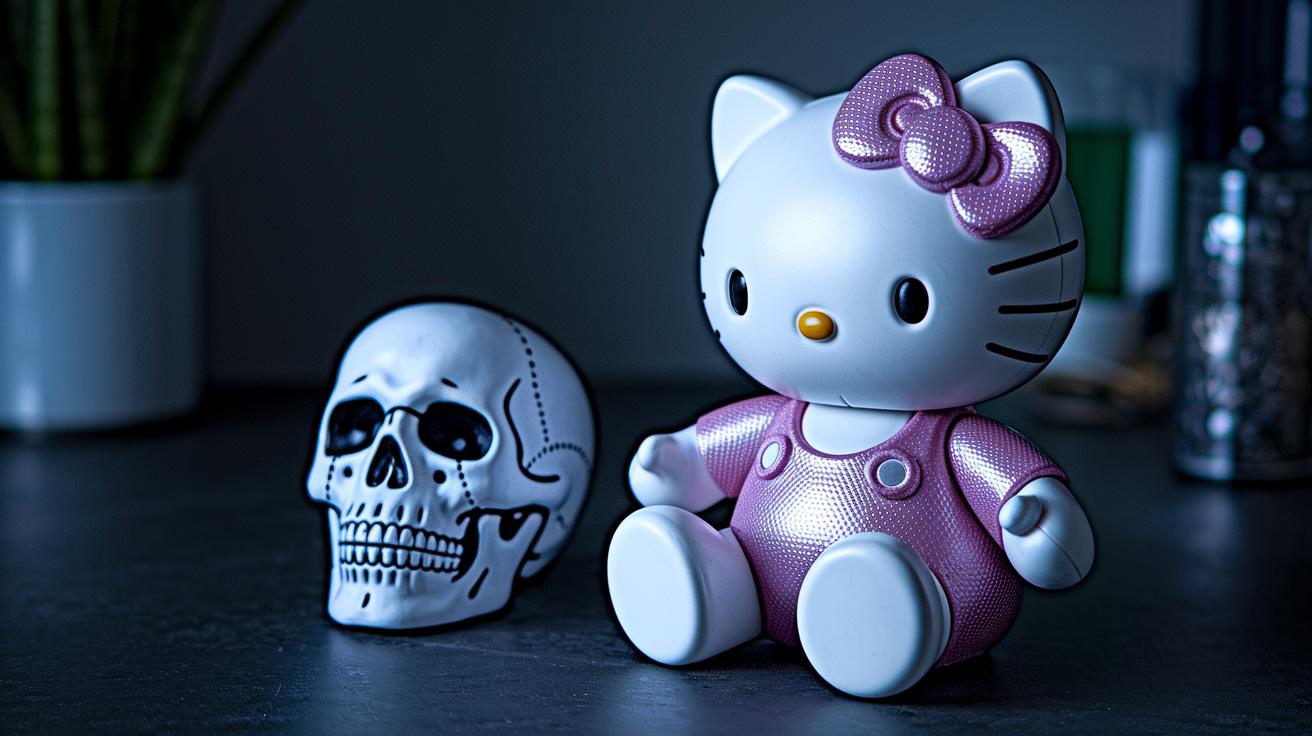
International media quickly grabbed hold of the eerie detail: a Hello Kitty doll concealing a skull. Reporters painted a vivid picture, making the scene feel almost like a scene from a dark movie rather than real life. One story noted that seeing a beloved image mixed with a human tragedy sparked global debates over how far visual storytelling should go.
In Hong Kong, local reactions were just as intense. People felt shock and anger, asking how such graphic details could be shared without disrespecting the victim's dignity. Conversations in cafés and community centers often turned to whether this type of sensational reporting might dull our sensitivity to violence or act as a vital warning about society’s darker side.
Over time, this case has become a prime example in true crime storytelling. Its striking details have been featured in many documentaries and online series, illustrating how media, culture, and the raw impact of crime interplay in our everyday lives.
Controversial Theories and Unresolved Questions in the Hello Kitty Murder Case
Some people think money troubles may have set off the tragic events, while others point to long-held grudges as the real spark behind the crime. The court records don’t give us a clear reason, leaving many to wonder if deeper, hidden issues played a role.
Adding to the confusion, missing details in police reports make some suspect that more people could have been involved. Rumors suggest that a few important facts might have been missed during the investigation, which has fueled talk about possible accomplices. Crime historians remain deeply interested, carefully reviewing every bit of the official record as if they were putting together a challenging puzzle. Their work has led to several ideas, including:
- Money problems disguised as personal feuds.
- Clues that hint at a larger network of people involved.
- Gaps and mistakes in the investigation.
- Odd behaviors shown by those who were convicted.
These unresolved questions keep both experts and the public talking, as everyone tries to figure out what really happened.
Final Words
In the action, we walked through the timeline and details of the hello kitty murder case, from Fan Man-yee's tragic fate through intense forensic reviews and trial proceedings. Every section offered a clear look at the case, from evidence gathering to societal reactions. The narrative brought to light each step of this brutal event with care and clarity. Ending on a note of cautious hope, we invite readers to reflect on how legal insights can guide future decisions and strengthen community trust in our justice system.
FAQ
What is the Hello Kitty Murder Case?
The Hello Kitty Murder Case is a notorious homicide from 1999 in Tsim Sha Tsui, Hong Kong that involved the brutal murder and dismemberment of Fan Man-yee, with three men sentenced to life in prison.
Who was Fan Man-yee?
Fan Man-yee was a 23-year-old mother and part-time nightclub employee who became the victim, held captive and tortured for weeks by individuals known to her from her work and social circles.
When and where did the key events of the case occur?
Critical events unfolded in mid-1999 in Tsim Sha Tsui, Hong Kong. Fan Man-yee was abducted in June, held captive and tortured until late July, with convictions and life sentences handed down in December.
What did forensic evidence reveal in the investigation?
Forensic findings detailed the dismemberment, skull fractures from prolonged torture, absence of defensive wounds, and a skull hidden inside a Hello Kitty doll, all of which significantly shaped the case.
How did trial proceedings and judicial outcomes unfold?
Trial proceedings included detailed discussions of witness statements and forensic evidence. The case concluded in December 1999 with three male suspects receiving life imprisonment for their roles in the brutal crime.
How did media coverage and public reaction impact the case?
Media outlets around the world focused on the case details, especially the use of a Hello Kitty doll. This sensational reporting sparked public outrage and discussions on ethical crime reporting in Hong Kong.
What controversies and unresolved questions remain about the case?
Controversial theories have emerged, suggesting motives ranging from financial disputes to personal vendettas and potential additional accomplices, yet key elements of the motive still remain unresolved.