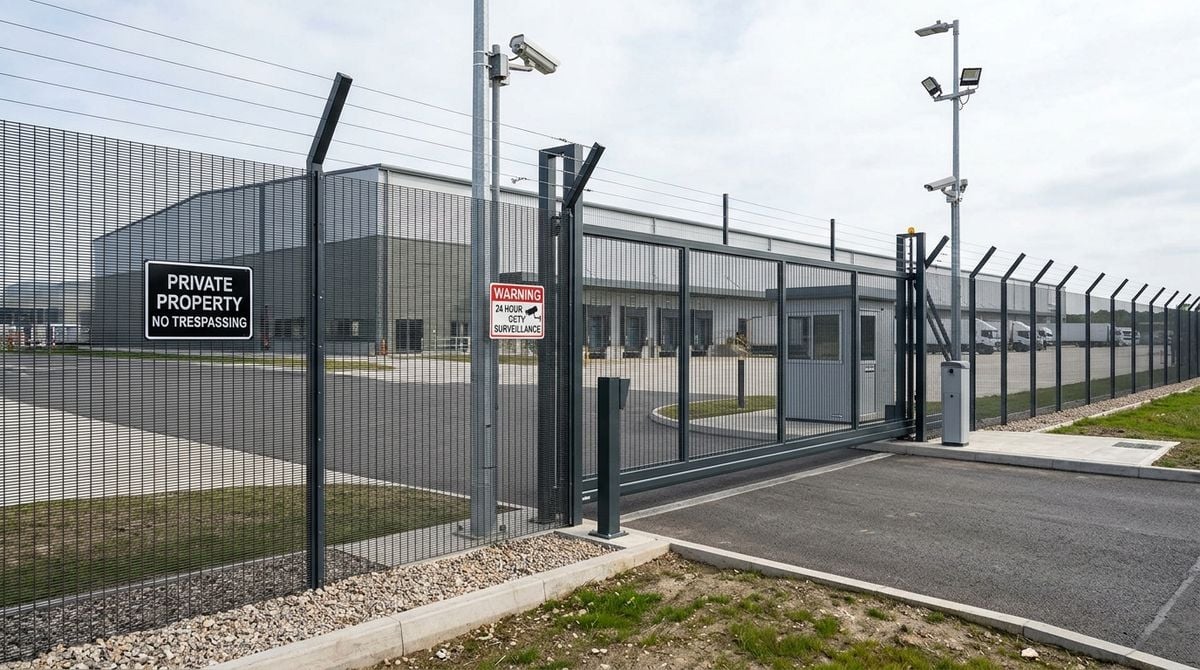

Commercial property owners, facility managers, and business tenants increasingly deploy wireless monitoring hardware to protect physical premises, secure exterior loading bays, and safeguard customer parking areas. While rapid deployment and cable-free installation make modern wireless equipment appealing, operating active surveillance touches sensitive legal territories. Property managers must navigate individual privacy expectations, physical property lines, municipal video ordinances, and corporate recordkeeping obligations before activating any monitoring grid.
Implementing surveillance across commercial real estate requires a structured, preventive compliance framework. Unplanned installations can quickly lead to contentious disputes with adjacent property owners, commercial patrons, labor representatives, or municipal regulators. Establishing clear operational boundaries ensures that physical security measures achieve legitimate business objectives without generating unforeseen civil liabilities or regulatory violations.
A legally sound wireless surveillance plan addresses everything from physical mounting angles and spectrum transmission security to long-term record archiving. By taking proactive measures during system design, commercial operators can establish robust property protections while maintaining strict adherence to current legal standards.
Establishing Legitimate Security Interests and Spatial Boundaries
A foundational doctrine in commercial surveillance law involves balancing a business entity’s legitimate interest in asset protection against reasonable public and private expectations of privacy. Courts evaluate whether camera placement serves a genuine commercial purpose, such as deterring burglary, managing dock safety, or monitoring visitor entrances, rather than intruding into zones where individuals possess an expectation of seclusion.
Commercial operators must evaluate lens focal lengths, resolution thresholds, and optical coverage angles before finalizing installation points. When planning outdoor hardware deployment, consulting technical resources from bestwirelesssecuritycamera helps facility managers choose appropriate lens angles, mounting elevations, and enclosure specifications that focus strictly on property perimeters without capturing sensitive adjacent areas or residential structures across boundary lines.
Inadvertent capture of neighboring parcels, residential balconies, or employee break areas can trigger common-law invasion of privacy or private nuisance claims. Modern wireless units often feature software-driven privacy masking, which digitally blacks out specific quadrants of a camera view. Utilizing masking controls creates verifiable, tamper-resistant evidence that the enterprise took active precautions to respect surrounding property lines.
Commercial lease covenants also dictate spatial placement rules. Commercial tenants must examine lease agreements before drilling into building envelopes or affixing wireless transceivers to common-area walls. Installing cameras in shared entryways or joint parking facilities often requires formal landlord consent, coordinated insurance coverage, and clear contractual allocations of liability for recorded footage.
Navigating Audio Recording Laws and Wiretap Covenants
Many off-the-shelf wireless monitoring units arrive from manufacturers with high-gain ambient microphones enabled by default. From a legal standpoint, audio capture introduces far more severe statutory hazards than silent video surveillance. Federal and state wiretap statutes regulate the interception of oral communications, and unauthorized audio recording can trigger felony penalties and statutory damages.
Jurisdictions maintain divergent rules regarding consent for oral recordings, dividing generally between one-party and all-party consent requirements. In a public or semi-public commercial setting, obtaining affirmative consent from every vendor, patron, and passerby is practically impossible. Because audio sensors capture private discussions occurring near entrances or walkways, activating audio features creates immediate exposure to civil and regulatory complaints.
The safest legal protocol for exterior commercial surveillance is permanently disabling audio recording functions at the hardware and software levels. If a specific commercial setting demands sound recording, such as a high-risk financial transaction counter, legal counsel must review the configuration to confirm compliance with state-specific wiretap exceptions and mandatory disclosure standards.
Clear physical signage remains mandatory for establishing legal notice. Prominently mounted warning plaques should appear at all property entrances, pedestrian walkways, and perimeter gates. Signs must clearly state that video surveillance is active, display clear visual iconography, and identify the property management contact responsible for facility operations.
Safeguarding Network Transmissions and Data Storage
Unlike legacy closed-circuit television systems operating on isolated coaxial cabling, wireless surveillance transmits video packets through radio frequencies and local network routers. This connected environment introduces significant data security liability. If a business fails to secure its wireless video streams and unauthorized actors intercept footage, the business could face regulatory investigations and negligence claims.
Isolating surveillance equipment from primary enterprise networks is an essential baseline defense. Security feeds should reside on dedicated virtual local area networks with robust encryption standards, strong administrative passwords, and disabled universal plug-and-play features. Studying industry guidance and connectivity insights from digital-polyphony.com assists technical teams in designing structured, isolated communication links that prevent perimeter devices from becoming bridgeheads for network intrusion.
Data retention policies must be formalized in writing. Storing high-definition wireless surveillance video indefinitely creates excessive legal discovery burdens during commercial litigation. If an enterprise retains recordings beyond operational necessity, it may be compelled to produce extensive, irrelevant historical files during civil discovery, drastically increasing litigation expenses.
Cloud-hosted storage solutions also require scrutiny regarding data sovereignty and third-party access rights. When utilizing third-party cloud platforms for wireless footage archiving, management must verify that vendor agreements specify strong encryption at rest, disclaim vendor ownership of recorded content, and mandate timely notification if law enforcement agencies issue subpoenas for stored video.
Device Lifecycle Management and Disposal Safeguards
Commercial security hardware experiences regular refresh cycles as facilities upgrade resolution, infrared capabilities, and battery performance. Disposing of decommissioned wireless cameras requires strict adherence to electronic data protection principles, as neglected hardware can become a source of sensitive corporate intelligence.
Modern wireless cameras incorporate internal solid-state memory, embedded operating systems, cached network credentials, and cryptographic certificates. Discarding or re-selling retired units without executing thorough sanitization protocols leaves internal network identifiers and archived video fragments vulnerable to extraction. Following established commercial smart device refurbishing guidelines ensures that decommissioned hardware undergoes cryptographic erasure and physical inspection before being repurposed, donated, or recycled through commercial channels.
Facility administrators must maintain an auditable hardware registry tracking every deployed wireless device. When a camera is decommissioned, internal records should record the serial number, removal date, the technician performing the factory wipe, and the final disposal destination. This chain of custody protects commercial property managers if discarded equipment is later discovered in unauthorized hands.
Drafting Enforceable Monitoring Policies and Record Protocols
A legally defensible surveillance operation requires comprehensive internal governance documents. Written operating procedures demonstrate that an organization uses monitoring equipment in good faith, adheres to objective administrative standards, and avoids arbitrary or discriminatory observation practices.
Surveillance policies should clearly outline procedural safeguards governing system access and record preservation:
- Designated employee roles authorized to view live feeds, export historical footage, or adjust camera positioning.
- Automated retention schedules specifying the routine timeframe after which unflagged footage is permanently erased.
- Formal incident preservation protocols triggered immediately upon notification of slip-and-fall events or property crimes.
- Scheduled physical and digital audits to ensure cameras remain aimed strictly within approved commercial boundaries.
When an incident occurs on commercial property, staff must promptly issue a litigation hold on pertinent footage. Failing to preserve relevant video after receiving notice of an injury or property claim can lead to court sanctions for evidence spoliation, creating adverse legal inferences that undermine the business during subsequent disputes.
Chain-of-custody documentation must accompany any exported video clip. When security managers extract video for internal disciplinary reviews, insurance claims, or law enforcement investigations, they should record the export date, specific camera identifier, cryptographic file hash, and the identity of the recipient to ensure evidentiary integrity in court proceedings.
Maintaining Continuous Compliance Through Regular Audits
Commercial wireless monitoring is not a static setup; it requires recurring administrative reviews to keep pace with evolving legal standards, shifting tenancy agreements, and physical property modifications. Seasonal tree growth, new exterior tenant signage, or commercial building renovations can alter camera sightlines, inadvertently creating new privacy conflicts with neighboring parcels.
Conducting quarterly compliance reviews allows facility teams to verify that physical warning signs remain unobstructed, firmware updates are applied to patch security vulnerabilities, and privacy masking boundaries remain properly calibrated. Proactive oversight ensures that commercial wireless surveillance delivers dependable asset protection while preserving the legal rights of patrons, employees, and neighbors alike.